
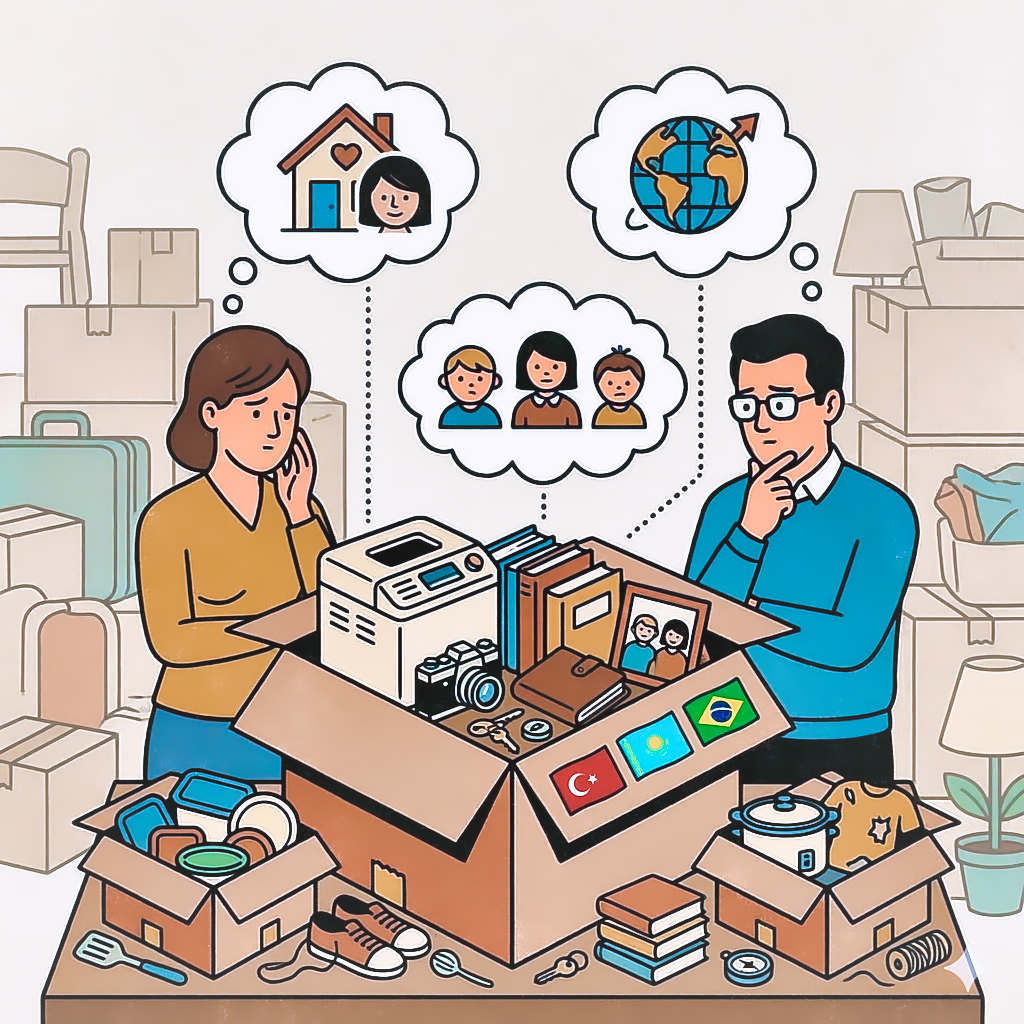
It started with the bread maker…
My mother had given it to me a few years earlier, one of those gifts that arrives with a whole story attached. She’d used hers every weekend for as long as I could remember, and she wanted me to have the same ritual in my own kitchen. I used it maybe half a dozen times. It sat on the counter for a while, then migrated to a shelf, then disappeared behind the slow cooker and a pile of mismatched Tupperware lids. I hadn’t touched it in over a year.
But standing in our basement in the National Capital Region, preparing for our first posting, I couldn’t put it in the donate pile. It wasn’t about bread. It was about my mother, and the idea that getting rid of her gift meant getting rid of something between us.
This is the moment every diplomatic family knows, the moment when “sorting your belongings” stops being a logistics exercise and becomes something far deeper. A reckoning with who you are, what you carry, and what you’re willing to leave behind.
We’ve packed up our family’s life three times in eight years.
That first time, surrounded by everything we’d accumulated since the kids were born — Marisol had just turned three, Manolo was five, Esteban was eight — I had no framework for any of it. We were heading to Turkey, and I was terrified of regret.
I kept the bread maker. I kept most things. Stuffed animal, board game with missing pieces, several “just in case” items that, in my mind, justified the storage fees. We thought we were only leaving for three years — how much could we really let go of? Way too much went into storage, and what didn’t go into storage went into the shipment.
I packed like a man who believed that holding on to objects meant holding on to his life. And I suppose that’s exactly what I was!
Psychologists have a name for what makes this so hard: the endowment effect. Once we own something, we overvalue it — not because of what it’s worth, but because it’s ours. As Christian Jarrett writes in The Psychology of Stuff and Things, our possessions become part of our “extended self,” and parting with them can feel like losing a piece of who we are. You’d think that people who move frequently would naturally own less. But the opposite tends to happen. With each chapter of life — each city, each posting, each child — we gather objects that anchor us. They’re tangible proof that your life happened somewhere, that you belonged. And that’s precisely what makes the pre-move purge so agonizing. You’re not just sorting kitchen utensils. You’re asking yourself which memories deserve to travel with you into the next chapter — and which ones you trust yourself to carry in your heart alone.
Turkey: The Learning Curve
Our posting in Turkey was a hardship level 3, which meant a furnished apartment. That’s something first-timers don’t always understand right away: the hardship level of your posting determines a lot more than a pay differential. Different hardship levels can mean different standards for housing, shipping allowances, and more. The level shapes whether your accommodation is furnished or unfurnished, which directly affects your shipping weight allowance under FSD 15, your storage entitlements, and even the possibility of shipping items via diplomatic bag.
We didn’t fully grasp this until our things actually arrived in Turkey. Because we’d kept most of what we owned, the shipment was massive — and when the boxes started piling up in our furnished apartment, we were invaded. Small furniture we didn’t need because the apartment already had its own. Bins of kids’ toys stacked in hallways. We’d shipped our entire life into a space that already had one.
But the air shipment was the real lesson. We’d been given the choice between an air shipment or extra suitcases, and we chose the air shipment because it sounded more official, more substantial. Mistake. Our air shipment arrived the same day as our sea shipment — both held up by Turkish customs for months. We’d been living out of suitcases anyway, waiting for both, and when everything showed up at once it felt absurd. All that agonizing about what needed to arrive “quickly” versus what could wait — and it all walked through the door on the same afternoon.
An air shipment is a promise. Suitcases are a certainty.
I tell every family heading out on their first posting: if the option of extra suitcases is offered instead of an air shipment, take the suitcases. Every time. No exceptions. Those bags travel with you. They clear customs with you. They’re in your apartment the night you arrive, when the kids are jet-lagged and need their own pillow, their own pyjamas, the one book that makes a strange room feel like theirs.
One thing we did get right before Turkey: we bought a plastic Christmas tree before leaving Canada. It seemed like a small decision at the time, but it turned out to be one of the smartest things we did. You can’t buy a Christmas tree in Turkey — not easily, anyway. That first December abroad, when we set it up in our crowded apartment and hung the ornaments we’d shipped, something shifted. The apartment stopped being a government-issue furnished unit and started being ours. Holiday decorations became non-negotiable on every packing list after that. In countries where your holidays aren’t celebrated, the decorations aren’t just festive — they’re the difference between feeling at home and feeling like a guest in your own life.
Kazakhstan: Getting Better — But Not Enough
By our second posting — Kazakhstan, hardship level 5 — we’d learned a few things. We were smarter about researching the destination, reaching out to families and other CBS already at post. It was a small mission, but those early connections helped — we were greeted on arrival, got tips about life in Astana, and felt less alone from the start. The specific questions mattered: what can’t you buy locally? What did you wish you’d brought? What did you ship that gathered dust? That intelligence was worth more than any packing checklist. (For our later posting to São Paulo, we’d take this even further — establishing a relationship with two families already there well before we arrived, which made the transition dramatically easier.)
But we still shipped too much. When the boxes arrived in Kazakhstan, the same feeling hit us all over again — invaded by our own belongings. We’d improved, but not enough.
And we were still holding on to things we shouldn’t have. The kids’ early toys, their toddler clothes, boxes of books we told ourselves we’d reread one day. Kazakhstan did teach us the furnished-apartment discipline, at least in theory. When your residence already has a couch, a dining table, and beds, you realize how little of your own furniture you actually need at post. What you do need are the things that transform a furnished government apartment into your home: the kids’ artwork, a few familiar kitchen items, the plastic Christmas tree and holiday decorations that make December feel like December even when December looks nothing like it does in the National Capital Region. Those are the items that weigh almost nothing in a shipment but carry enormous emotional weight.
The Storage Reckoning
Between our second and third postings, we had the chance to access our long-term storage in the National Capital Region. I’ll never forget walking into that facility.
It was like opening a time capsule left by strangers.
Marisol’s toddler toys — she was a teenager now. Manolo’s picture books and early readers — he’d moved on to reading in three languages. Esteban’s entire collection of things from his elementary school years — he was practically an adult. We stood there looking at boxes we’d carefully packed a decade earlier, and almost nothing in them mattered anymore.
Not because the memories weren’t precious, but because the kids had grown into entirely different people, and so had we.
The grandmother’s desk drawers were still there, tucked against the back wall. My spouse ran her hand along the wood and we looked at each other. Those were staying. Some things aren’t about math — they’re about Sunday mornings and family history and the feeling of a surface worn smooth by four generations of hands. But they were the exception, not the rule.
The technology was the other shock. Laptops that wouldn’t run Windows 10. Cables for devices that no longer charge. An external hard drive that I’d considered essential — I couldn’t even remember what was on it.
And the books. Stacks and stacks of books we’d convinced ourselves we’d want to reread. We hadn’t missed a single one in ten years.
The bread maker was in there too. I found it in a box marked “Kitchen — Sentimental” in my own handwriting. I held it for a moment. My mother was a phone call away. The ritual she’d wanted me to have — I’d never adopted it, and I’d carried the guilt of that across two continents. I took it, but to leave it for donation. It was time.
What hit hardest wasn’t the waste — it was how completely our priorities had shifted. The things that felt indispensable when we were a young family leaving Canada were meaningless to the family that came back to open those boxes. We’d changed. The kids had changed. The only things worth keeping were a few genuinely sentimental items that no amount of time could make irrelevant — and the grandmother’s desk drawers were one of them.
This is the storage paradox that experienced diplomatic families warn about — one that CDFN members have written about in Essential Moving Tips for Diplomatic Families and Update Your Inventory… Now!. You store things because you’re afraid of regret. But the real regret, for many families, comes later — when you open that unit after years and realize you’ve been keeping belongings you’d completely forgotten you owned.
Brazil: The Real Purge
Our third posting — Brazil, hardship level 3 — was when everything finally clicked. But not without one more lesson.
We knew our staff quarters (SQ) in Brazil would be significantly smaller than what we’d had in Kazakhstan. So before we even left, we started letting go. We organized free garage sales at the embassy for locally engaged staff — good-quality items that deserved a second life. We gave things to our housekeeper, to charities. The kids’ winter gear went to families in Astana who could actually use it — it would have been useless for Brazilian kids. We shipped almost no furniture, just the essentials.
And yet, even after all that, we still had too many things when they arrived in Brazil. More went to charity on the other end. It was a two-stage purge — one in Kazakhstan, one in São Paulo — and both were necessary.
It stung at times. But it was also liberating. We weren’t just decluttering out of principle — we were doing it because we had no choice, and the result was a life that actually fit our new space.
By the third posting, we knew the drill — furnished apartment, reduced weight allowance, diplomatic bag for essentials. The hardship level shaped every packing decision, and this time we actually listened.
This time, we had a secret weapon: AI.
For our previous inventories, the process had been brutal — going room by room with a clipboard, manually listing every item, estimating weights and values, trying to keep a spreadsheet updated while the kids ran circles around us. It took days. It was the part of every move I dreaded most.
While still in Kazakhstan, preparing for the move to Brazil, I tried something different. I started from my previous inventory and walked through the apartment with my phone, taking photos of every room, every shelf, every closet. Then I fed those photos into an AI chatbot and asked it to fill in the details — serial numbers, brands, models, values, condition. The kind of information that normally turns inventory day into a Google treasure hunt, checking every label, every receipt, every product page. The AI handled the tedious lookup work, and within minutes I had a structured, detailed inventory that would have taken me hours to build by hand. I pasted it into a spreadsheet, cleaned it up, and had a working document in a fraction of the time.
It wasn’t perfect — the AI occasionally got creative with its descriptions, and it couldn’t tell the difference between my spouse’s jewellery box and a decorative container — but as a starting point, it was transformative. I’d estimate it cut our inventory process by 50%. And for a family on its third move, already exhausted by the logistics of uprooting kids from school and saying goodbye to friends, those reclaimed hours weren’t just a convenience. They were hours we spent with the kids instead of hunched over a clipboard. That’s what technology should do during a move — not add complexity, but give you back the time that matters.
Lesson learned for First-Timers
After three postings across three continents, here’s what I learned:
| Lesson | Why it matters |
|---|---|
| It gets easier | Not because the emotions get simpler, but because your judgment gets sharper. You learn what you actually use, what you actually miss, and what you keep only out of guilt or habit. The first purge teaches you what you need. The second teaches you who you are. |
| Take the suitcases | When your department offers extra baggage instead of an air shipment, say yes. Your suitcases are the one part of the move you fully control — they travel with you, clear customs with you, and they’re there the night you arrive. |
| Buy the Christmas tree | In countries where your holidays aren’t celebrated locally, holiday decorations are the difference between a government apartment and a home. They weigh almost nothing. Ship them every time. |
| Audit your storage | When it’s covered by the FSD, there’s no financial pain to remind you of what you’re keeping. Set a reminder. Review your inventory between postings. Open those boxes if you get the chance — you’ll be amazed at how much you can let go of. |
| Use AI to help with the inventory | Take photos of every room, let the tool fill in serial numbers, brands, models, and values, then refine. It won’t replace your judgment, but it will give you back hours you’d rather spend with your family. |
| Your kids will surprise you | The toys and books and clothes we agonized over storing? They don’t remember most of them. What they remember is the Lego that survived every move, the family photo that hung in every apartment, and the feeling of walking into a new home and knowing their people were already there. |
More from CDFN on this topic
- Essential Moving Tips for Diplomatic Families
- Update Your Inventory… Now!
- Behind the Curtain: Stories of Resilience and Growth
- The Cycle of Goers, Stayers, and Newbies
- Your Computer’s Posting Transition
- Globe-Trotter Academy Podcast
Key Foreign Service Directives (NJC)
The following directives govern relocation entitlements for Canadian diplomatic families. We encourage you to consult them directly — no interpretation here, just the official links:
- FSD 15 – Relocation — Household effects shipment, weight allowances, long-term storage, and the Flexible Relocation Expenses Fund
- FSD 15 – Shipment of PMV — Shipping and storage of your vehicle
- FSD 16 – Assistance for a Principal Residence — Support related to your Canadian home while posted abroad
- FSD 25 – Shelter — Accommodation at post, shelter cost provisions
- FSD 58 – Post Differential Allowance — Hardship post levels (I–V), which influence shipment allowances and other entitlements
- Appendix B – Post Rating Levels — The official list of hardship ratings by post
- Complete Foreign Service Directives (April 1, 2025) — Full directive index
- FSD Cyclical Review – FAQ (April 2025) — Answers to common questions about the latest changes
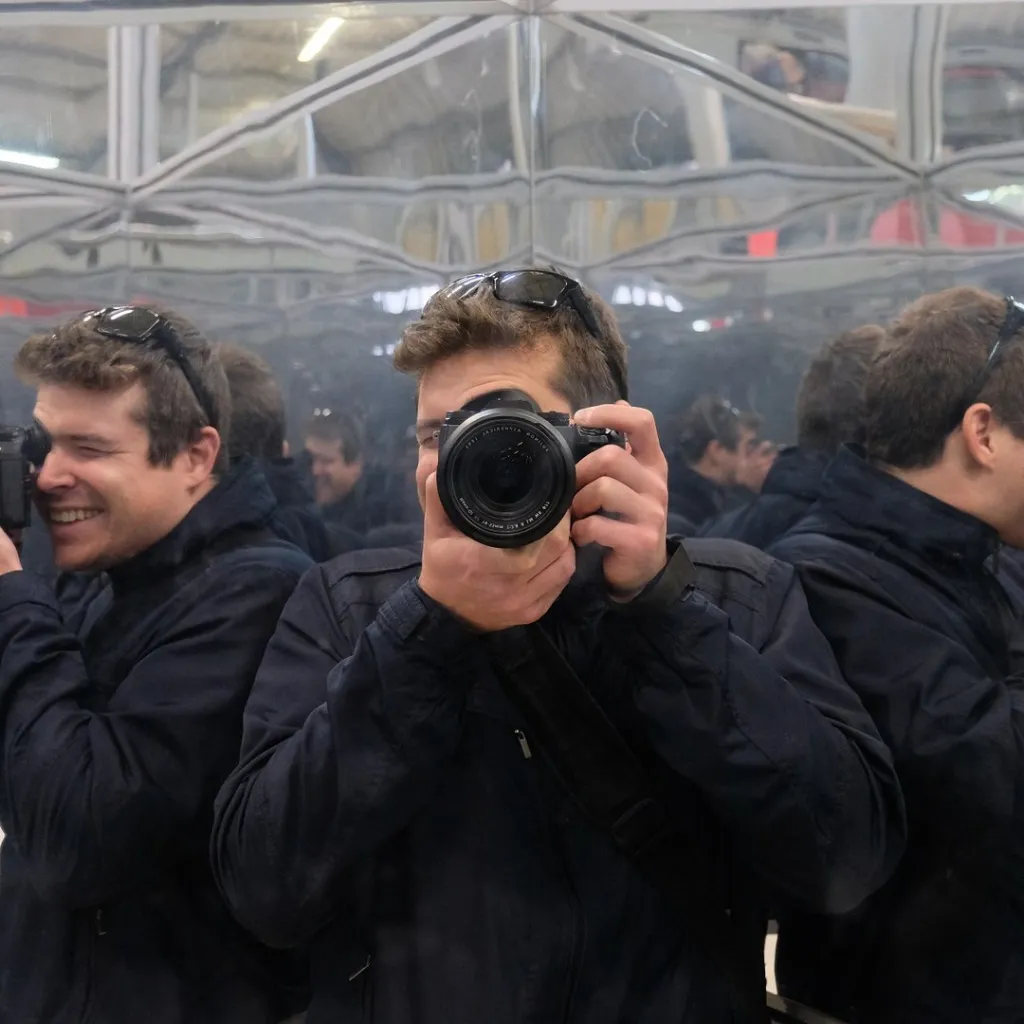
Former journalist for the CBC, Patrick has been abroad for a decade. From Turkey to Kazakhstan, he is now in Brazil. His family changed a lot since he arrived in Turkey with 3 young children. His career path also changed, from learning to register a business for international freelance work to contributing to several small contracts at missions, Patrick found his way to build a professional life that he can carry with him.
- What I wish I’d known: Wisdom from partners
 Four founding CDFN members share the hard-won lessons they wish someone had told them before their first posting.
 - Need help with your FSD claims? Try this!
 Create your FSD-GPT AI assistant in 2 minutes to quickly search and summarize the complex government directives.
 - Employment Guide for Canadian Diplomatic Spouses Abroad
 Whether you’re a teacher, consultant, nurse, software developer, the question is the same: how do I keep working?