A Deep Dive into the Experiences and Priorities of Canadian Diplomatic Families
Postings abroad bring adventures, new cultural perspectives, and amazing traveling experiences. For the families accompanying the diplomats, these postings present a unique blend of opportunities and challenges.
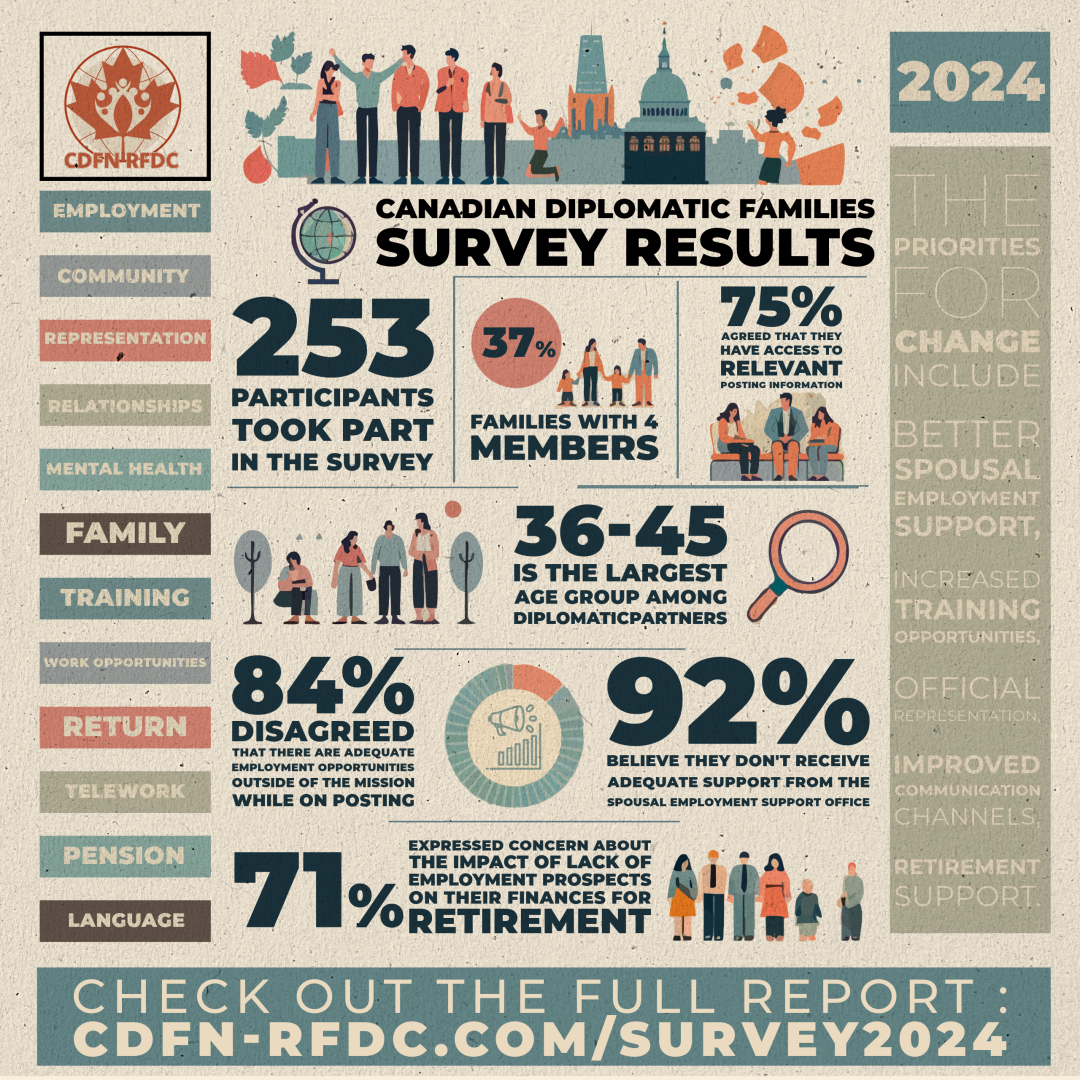
Recently, the Canadian Diplomatic Family Network (CDFN) conducted a survey to better understand the experiences of these families and to shine a light on the experiences, concerns, and suggestions for improvement from our community. With responses from 253 family members, the survey provides a nuanced view of life in a diplomatic household.
Who is our Community?
The survey highlights diversity in the community, with 17% identifying as visible minorities, 4% as 2SLGBTQI+, and 3% as people with disabilities.
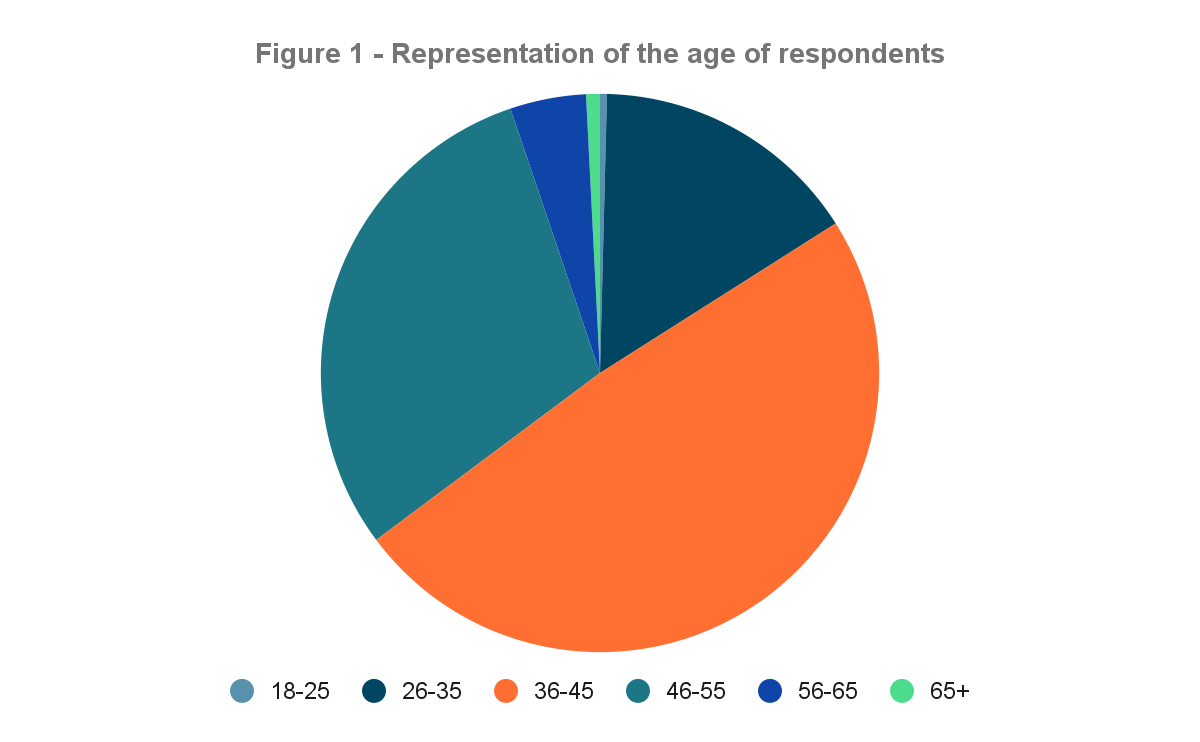
Age:
The largest age group is 36-45 followed by 46-55.
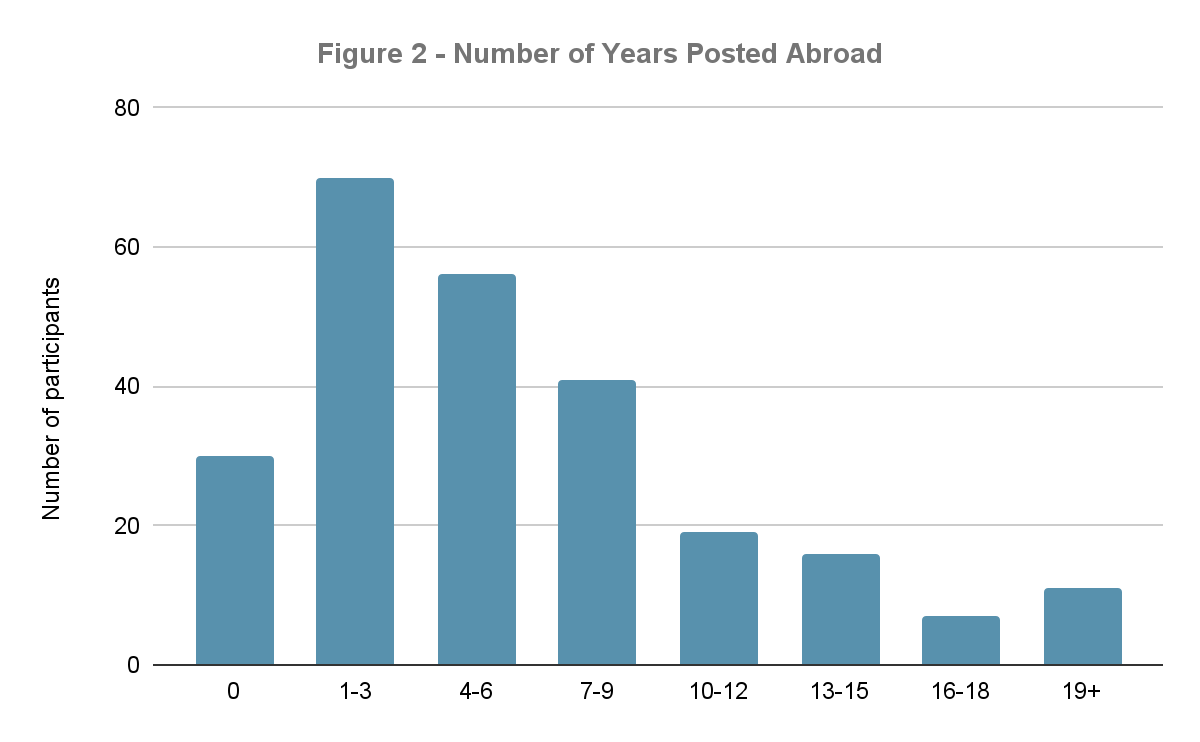
Years Posted Abroad:
Most have been posted abroad for 1-6 years. More than 10% are new or will be leaving soon.
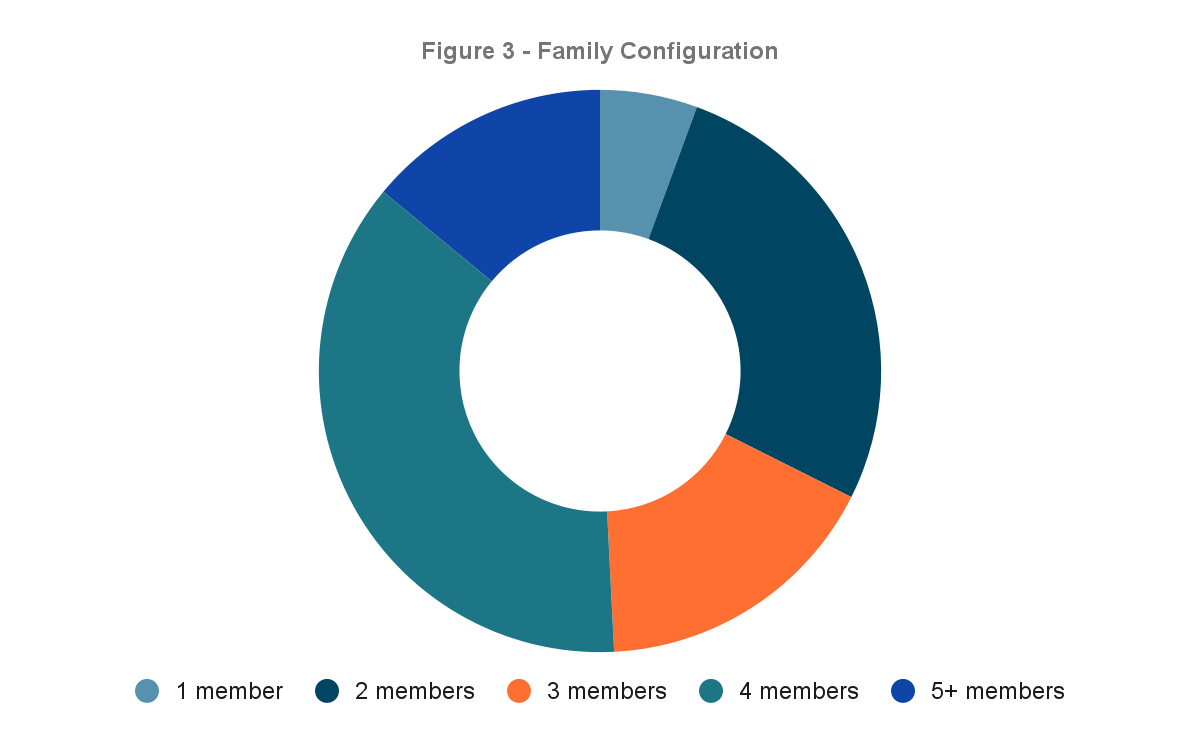
Family Configuration:
The most common family configuration is 4 members, followed by families of 2.

Relationship to the Foreign Service Officer:
The majority are married to or in common-law relationships with the foreign service officer.
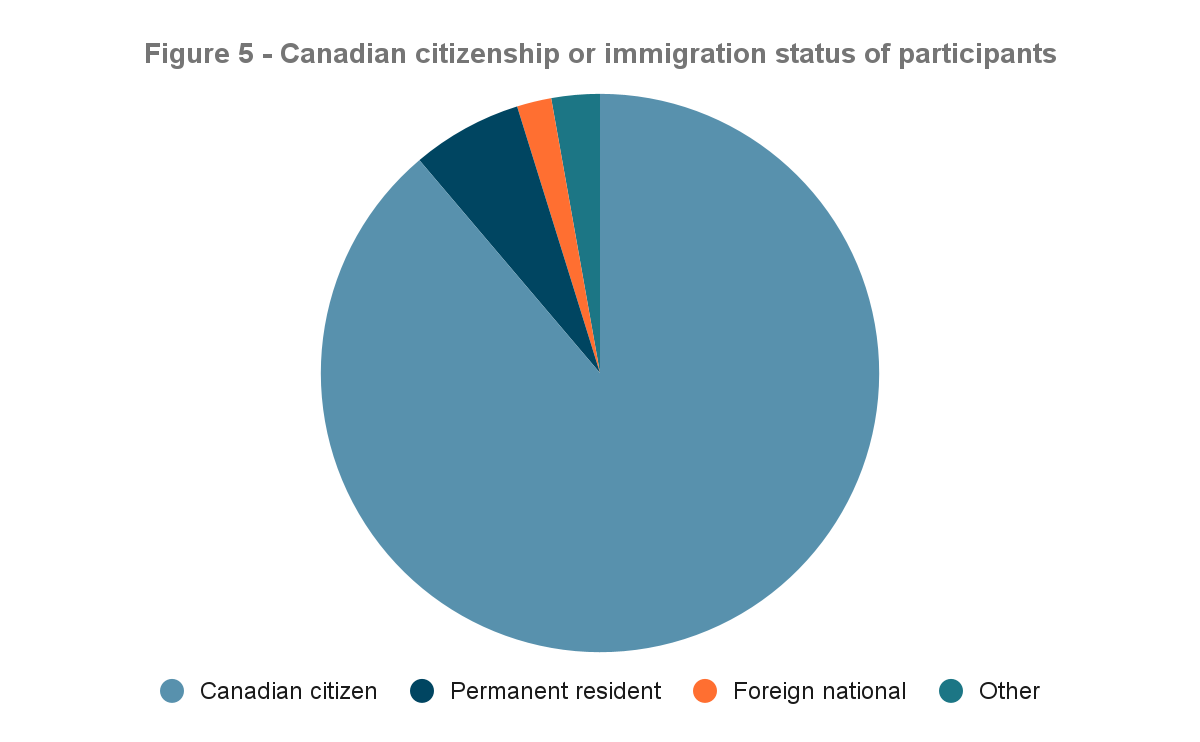
Canadian Citizenship or Immigration Status:
Most are Canadian citizens.
While postings abroad are generally viewed positively, the survey reveals several challenges faced by diplomatic partners.
The Search for meaningful work
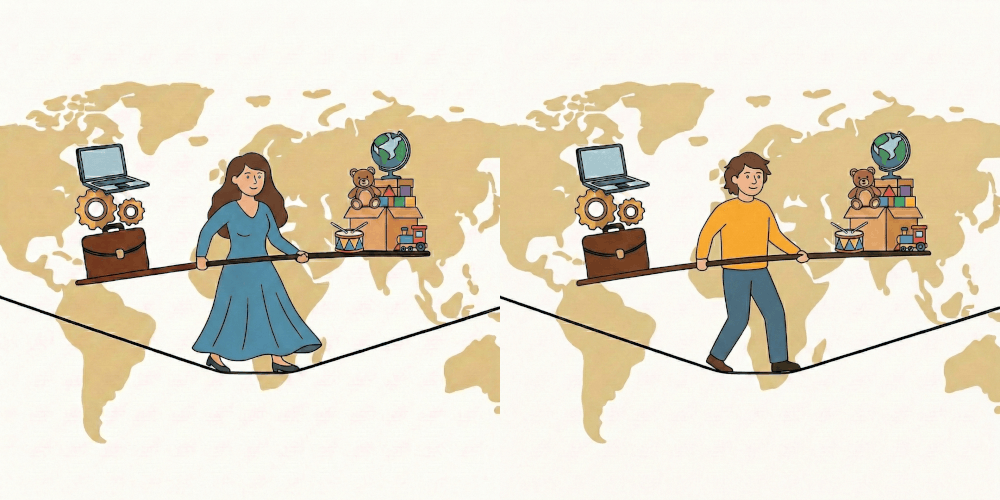
With nearly half of respondents in their mid-30s to mid-40s, a time when many professionals are reaching new heights in their careers, spouses’ and partners’ career goals are often sidelined. They find themselves building—and sometimes rebuilding—lives in foreign countries as they support their diplomatic partners. For most, the decision to leave their own careers behind is not taken lightly, and the price of this choice is steep.
Barriers range from limited job availability, often due to the impossibility of working in the local market under a diplomatic visa, to impossibility to telework for other GoC departments or private sector employers.
Many spouses have called for the creation of an employment pool, similar to the U.S. Foreign Service Family Reserve Corps, where spouses can find meaningful roles within embassies. More than having a job; it would allow spouses to feel valued, connected, and a part of the mission.
While some have found roles either in missions (13%) or through teleworking in government or other sectors (18%), a significant portion of respondents struggle. Notably, 92% of respondents feel that support for spousal employment is insufficient, and 84% express concern over the lack of job opportunities both inside and outside missions.
Lost in translation: the struggle for language and connection
One of the most unexpected challenges of diplomatic life is the feeling of isolation, often magnified by language barriers. Nearly 65% of respondents shared that foreign language training would be a lifeline, allowing them to integrate, make friends, and feel more at home in their host countries.
The emotional impact: strain on mental health
Some report mental health challenges linked to the instability of the lifestyle and the strain it places on personal relationships. Personal testimonies highlight feelings of isolation and lack of support.
The term “dependent” was cited as highlighting the sense of powerlessness that can develop over time. Another prominent theme was the lack of clear communication channels and a feeling of exclusion from the diplomatic community.
The community divide: longing for inclusion
Diplomatic families often feel as “the invisible half of the mission.” Though they travel thousands of miles to support their partners, many feel they lack an official place in the diplomatic community.
Over half of the participants feel that an official group representing their interests would help them feel recognized, respected, and empowered to bring their unique perspectives into diplomatic circles.
The hidden cost: retirement worries
Financial stability, especially regarding retirement, was a major concern among survey respondents. Almost half of them advocated for government-funded contributions to CPP/QPP for spouses who left jobs to support their families abroad.
Turning wishes into action: the top proposals
The survey identified the top priorities, calling for policies that foster fair employment, respect, and security. Alongside paid roles for spouses, the most supported proposals include:
- Official representation and access to information: The desire for an officially recognized network and a communication portal highlights the need for better engagement and inclusion of diplomatic partners.
- Spousal employment: The need for better employment support is clear, with proposals for a formal employment pool, fair compensation, and improved telework arrangements receiving strong support.
- Training: Access to training, including foreign language training, career shift support, and public service courses, is a priority for the majority of respondents
Retirement support: The call for funding for CPP/QPP contributions underscores the financial sacrifices made by diplomatic partners due to posting-related unemployment, and difficult employment situations.
A vision for change: allow diplomatic families to thrive
The survey results represent more than data; they’re a roadmap to build a more supportive and compassionate framework for diplomatic families.
The CDFN aims to be a network to connect families and work closely with GAC on making more information available to them directly.
It is a valuable resource for understanding the unique challenges and opportunities associated with diplomatic postings.
You can also see the summary here: