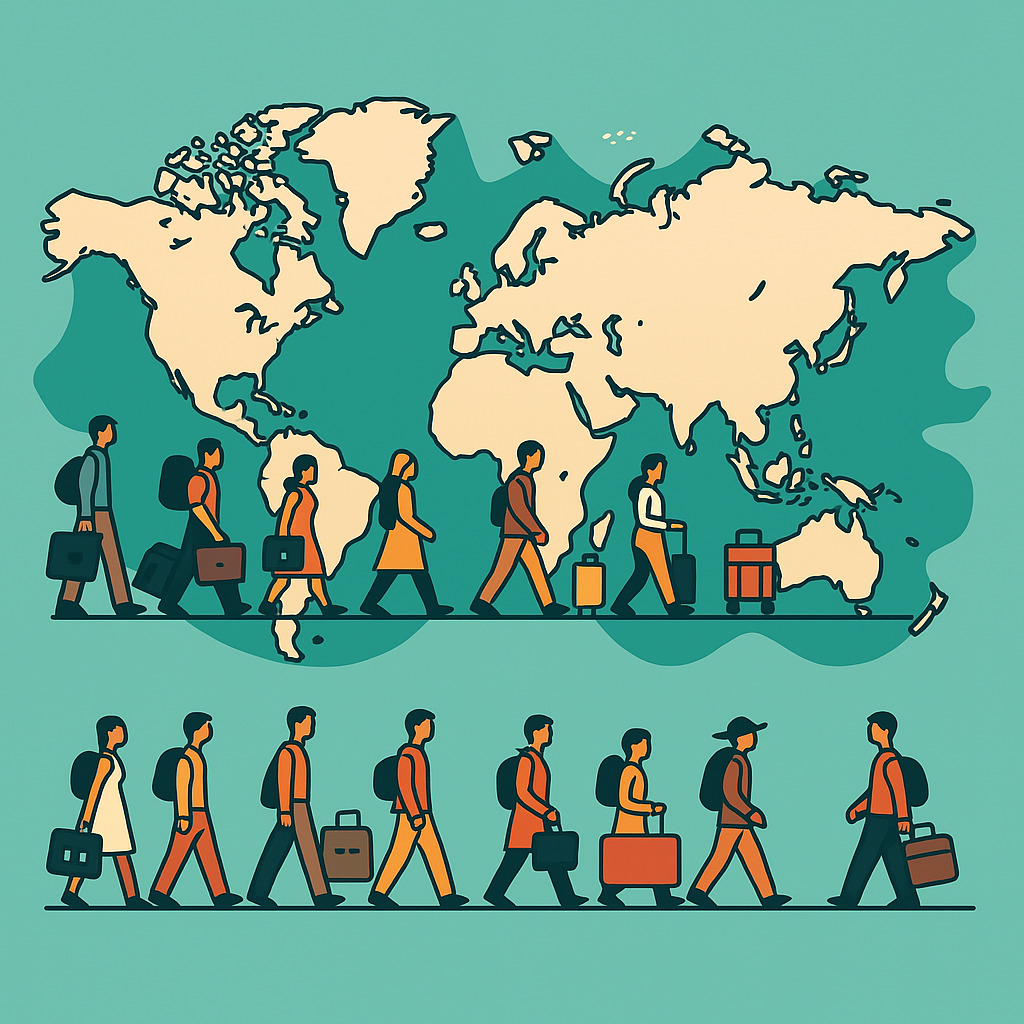

Loading the Elevenlabs Text to Speech AudioNative Player…After years abroad, you return with stories worth telling, only to find that home listens kindly, but not closely. Our unique lives can sometimes make it hard to connect with our friends and families in Canada.
The smell of maple-syrup ribs drifted through a Gatineau backyard, mingling with citronella and laughter. Friends compared cottage routes, school plans, and the progress of home renovations, the easy rhythm of lives continuing in familiar ways.
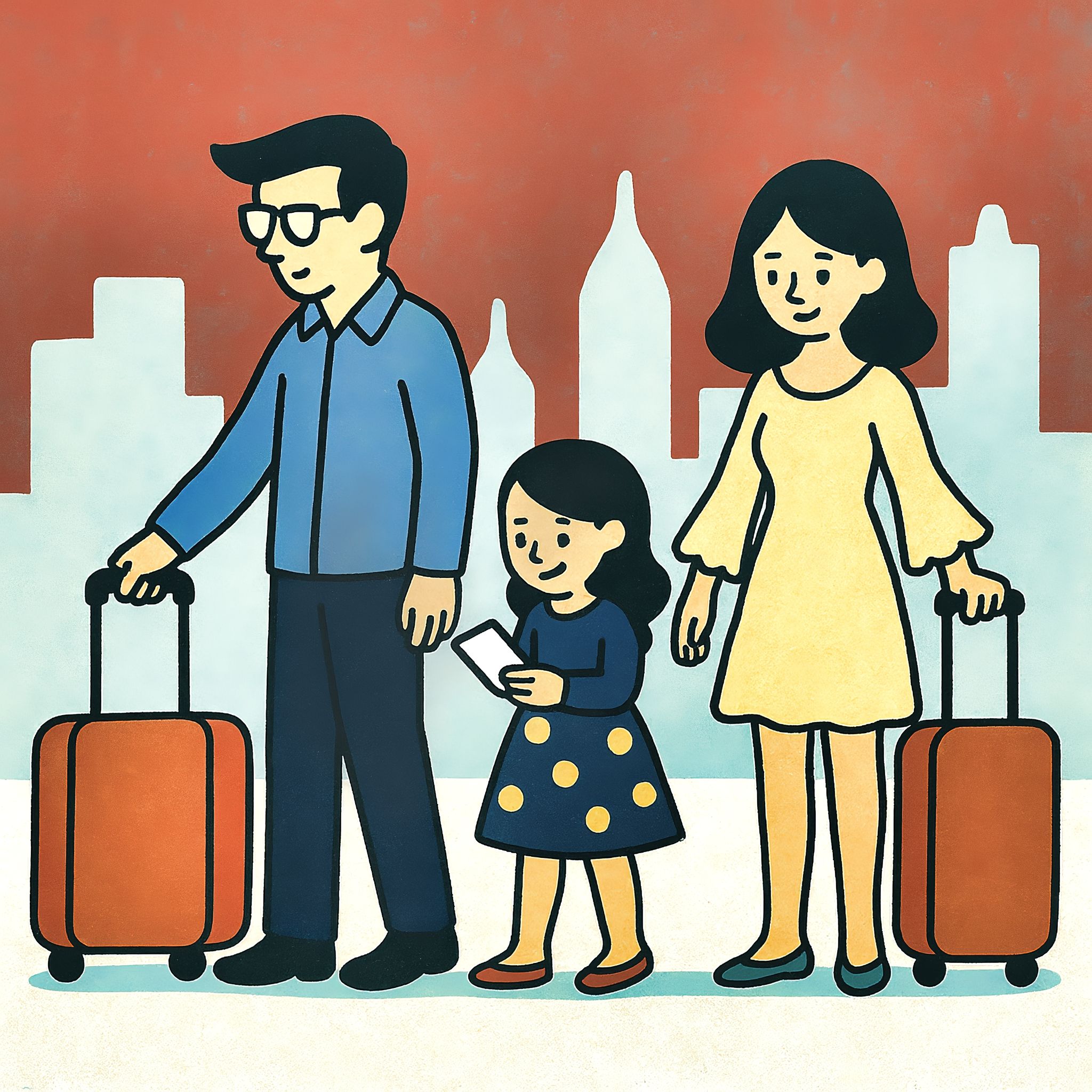
We’d just returned from three years in Kazakhstan, twenty suitcases divided between our parents’ basements, a month to catch our breath before moving to São Paulo. This barbecue was meant to feel like home.
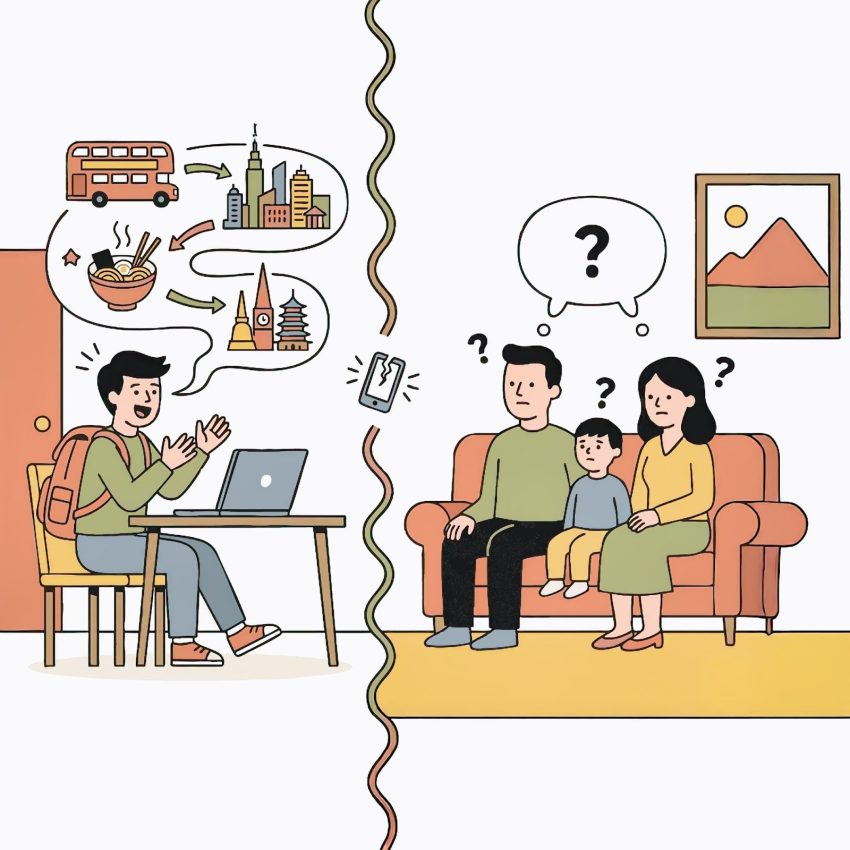
When someone asked, “So, how was it?” I smiled, unsure how to compress those years, the endless Kazakh steppe, the sudden beauty of Samarkand, the way Astana seemed to reinvent itself overnight. I began a story, but halfway through, I saw the polite nods, the gentle shifts in conversation. It wasn’t disinterest, they were sharing about their “Canadian” lives. I was the one who’d forgotten how to speak in “ordinary” terms.
The psychology of unshared experience
Psychologists at Harvard have a name for the feeling that drifts in after the first polite question, that soft disappointment when connection slips away. They call it the unforeseen cost of extraordinary experience.
In one experiment, researchers Gus Cooney, Daniel Gilbert, and Timothy Wilson asked participants to watch different videos, some funny, some dull, and then discuss them in groups. You’d assume the people who saw the more entertaining clips would feel happier. But the opposite happened. After they tried to share their experiences, those who had the “better” video felt lonelier, not closer.
Their joy didn’t translate.
The study’s conclusion was disarmingly simple: we bond more easily over what’s ordinary than over what’s exceptional. Shared boredom builds connection more reliably than solo wonder. It’s not because people envy you; it’s because conversation depends on common ground.
That’s the quiet paradox of global life. You come home carrying stories that feel luminous and significant, the markets of Samarkand, the silence of a Kazakh winter, the friendships that formed under diplomatic transience, and you want to offer them as a bridge. But instead, they land like postcards from another planet. People listen kindly. They nod. But you can feel the moment the story stops resonating to both of you.
Living between worlds
For diplomatic families, that Harvard paradox isn’t just a study finding, it’s the air we breathe. Our lives unfold through experiences that are anything but typical, and that can’t easily be understood. It often involves several layers of cultural, geographical, historical roots. We move between worlds that rarely overlap, learning to reset our sense of normal every time we unpack.
Psychologists call this the problem of “relatability anchors,” the emotional touchpoints that help people find common ground in conversation. When those anchors disappear, connection falters. While we were learning to navigate a bazaar in Tashkent or survive Astana’s minus-thirty winters, our friends back home were learning the unspoken rhythms of a local life we no longer understand. Neither path is richer or poorer, only different in its references.
Children feel this most sharply. Research on Third Culture Kids—those who grow up outside their parents’ home culture—shows lives marked by both adaptability and quiet displacement. David Pollock and Ruth Van Reken, who coined the term, found that these children often develop remarkable social intelligence, yet struggle with belonging. Home becomes not a place, but a pattern of leaving and returning.
Recent studies from the International Schools Consultancy Research and REC Parenting echo this duality. Globally mobile children are resilient, multilingual, curious but often lonely. They learn to mirror others easily, to read social cues with diplomat-like precision. Yet when they come “home,” they face what psychologists call reverse culture shock, the dissonance of feeling they should belong but somehow don’t. One teenager in a 2023 international school study put it simply: “I’ve lived everywhere, but I don’t feel from anywhere.”
Parents experience a version of the same drift. Sociologist Anne Copeland describes it as “invisible grief,” the mourning for places and people no one around you remembers. After each posting, families rebuild their domestic order—schools, kitchens, routines—while carrying emotional luggage that has nowhere to land. The grief hides beneath the logistics, and many lack what one repatriation therapist once called “a missing audience for the story of your life.”
The irony is that diplomatic families are trained to connect across cultures, yet often feel least understood in their own. The same flexibility that makes us effective abroad can make us hard to place at home. We come back fluent in empathy, but speaking a dialect few recognize.
It’s the quiet shock of realizing that while I was away, life at home kept moving in rhythms I no longer fully understand. Friends built routines, families evolved, small habits became shared references I wasn’t there to witness. And they, in turn, can’t quite see how I’ve changed.
That’s the heart of the communication paradox after long absences: the people who know me best can suddenly feel the farthest away. Our shared story has a missing chapter. They remember the version of me that left, while I return speaking from a place they’ve never been.
Bridging that gap begins with naming it. Research on repatriation shows that families who stay connected during their time abroad—through regular calls, updates, even small glimpses into daily life—tend to reintegrate more smoothly than those who try to rebuild connection all at once. The distance hurts less when the story has continued together, however loosely.
Finding my tribe
If there’s one clear lesson I’ve learned, it’s that I need two kinds of belonging.
The first is rooted in home, the family and old friends who remember where I started. They hold the comfort of continuity, even when the fit feels uneven. These relationships keep me tethered to the version of myself that existed before red passports and postings, before my sense of normal stretched.
The second kind is a belonging towards those who understand. These are the people who have lived the “in-between”, who know the weight of leaving and the awkward grace of return. They might be other diplomatic families, colleagues from past postings, or friends met through international schools and online expat communities. They speak my shorthand. They know why a farewell can feel like a small heartbreak, why my children’s multilingual chatter is both wonder and complication, why repatriation holds equal parts gratitude and grief.
Together, these two circles form a kind of balance, one reminding me where I come from, the other affirming who I’ve become.
And so the work of belonging begins again, not by trying to make our stories smaller, but by learning how to make them understandable.
Learning to be understood again
When home stopped understanding me, the answer wasn’t to speak louder, it was to translate better. Years of living across cultures have taught me that connection doesn’t depend on sameness, but on the willingness to build a bridge. Here’s what works for me:
I create shared experiences instead of long explanations
I cook something that I loved abroad, a Turkish “Çiğköfte” or a Jordanian cardamon coffee. I play a Kazakh rap video on YouTube or teach a phrase from the language we’ve just left behind. Small acts like these turn my stories into moments others can taste, laugh at, or remember. People still talk about the “kurts” I brought home, those dried sour milk “candies” most couldn’t keep in their mouths for more than a few seconds. The memory connects us more deeply than any travel tale ever could.
I start with emotion, not geography
When I tell a story now, I start with how I felt before describing where I was. Few people can imagine Astana’s skyline, the Silk Road echoes of Uzbekistan, or the landscapes of Kyrgyzstan, but everyone understands confusion, wonder, or doubt. Shared emotion is the shortest bridge between worlds.
I introduce difference without making it a divide
Sometimes I begin a story with, “It caught me off guard the first time I saw that.” A simple phrase like that softens the distance. It invites others in without asking them to pretend they already understand.
I try to tell stories through what we share, not what separates us
My child’s new school abroad isn’t really a story about moving, it’s about finding a place to belong. My own adjustment isn’t about visas or shipping crates, it’s about starting over. When I focus on the feeling beneath the experience, people recognize a piece of themselves in it too.
I’ve learned to go deeper only when someone leans in. When someone’s eyes light up or their questions linger, that’s my cue to unfold the story further.
I offer the same curiosity in return
Just as I hope others will listen to the strangeness of my life, I try to listen fully to theirs. Every hometown carries a landscape too. When I meet their stories with the same attention I long for, understanding becomes mutual, not one-sided.
Connection through presence
If we’ve made time to share a meal, a drive, or a late conversation during our short visits home, it’s because we still matter to each other. The shared table, the familiar laughter, the quiet effort to show up, that’s where belonging rebuilds itself, quietly and completely.
But even then, a part of me stays in translation. Reentry isn’t a single landing, it’s a language you keep learning, one gesture at a time.
Research on international friendships reveals something remarkable: when two people bond over their shared experience of living internationally, something transcends the typical patterns of friendship. They often report maintaining closer connections across distance than people who live in the same city. They understand each other’s transformations because they’ve undergone similar ones. They can say things like “I was homesick, but also I realized I’m not sure where home actually is anymore” and be met with understanding rather than confusion.
Sources & research foundation
The article draws on extensive research including:
The Unforeseen Costs of Extraordinary Experience
Extraordinary Experiences Are Socially Isolating
International School Educator Perspectives on Third Culture Kids
Raising expat kids: The identity dilemma
Restorative practices and Third Culture Kids
Raising Expat Kids and Third Culture Kids
International Schools and Third Culture Kids Identity
Cultural adjustment and reverse culture shock
Reverse Culture Shock – The Challenges of Returning Home
Expat culture shock boomerangs in the office
Former journalist for the CBC, Patrick has been abroad for a decade. From Turkey to Kazakhstan, he is now in Brazil. His family changed a lot since he arrived in Turkey with 3 young children. His career path also changed, from learning to register a business for international freelance work to contributing to several small contracts at missions, Patrick found his way to build a professional life that he can carry with him.